
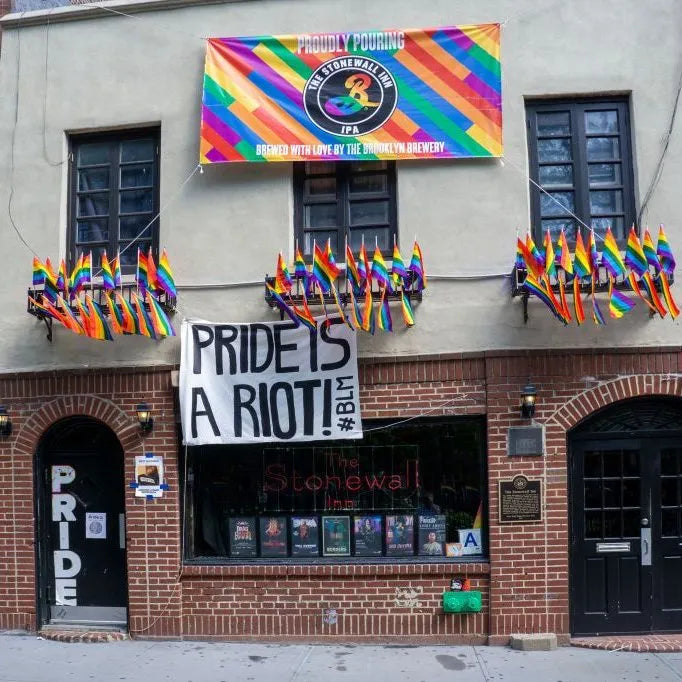
The Stonewall Riots : Igniting the Pride Movement
Picture this:

The Stonewall Inn wasn't just a watering hole; it was a sanctuary for drag queens, transgender folks, gay men and lesbians. In a world that often treated them as criminals or deviants, Stonewall offered a flickering flame of acceptance.
But let's rewind a bit. The 1960s weren't exactly the "peace and love" era for everyone. For the LGBTQ+ community, life was a constant tightrope walk over a chasm of discrimination. Being gay could cost you your job, your family and even your freedom. Gay bars were regular targets for police raids, harassment, and public humiliation.
Enter the fateful night of June 28. The cops showed up at Stonewall, as they often did, looking to arrest patrons for "crimes" like wearing clothes of the "opposite" gender. But this time, something in the air was different. As officers began their usual routine—lining up patrons, checking I.D.s, making arrests—the crowd outside the bar swelled. Then, like a spark hitting dry tinder, resistance flared.

Several nights of protests, scuffles, and displays of unbridled defiance followed. The riots weren't organized or planned; they were spontaneous combustion of years of pent-up rage and oppression. Key figures emerged from the chaos—like Sylvia Rivera, a trans activist who reportedly yelled, "I'm not missing a minute of this—it's the revolution!" And indeed, it was.
Word spread quickly, and the crowds grew each night. Between June 28 and July 3, the streets around Stonewall pulsed with energy. Chants of "Gay Power!" echoed off buildings. The media, initially dismissive, couldn't ignore the swell of voices demanding to be heard.
But the Stonewall riots weren't just a flash in the pan. They were the Big Bang of the modern Pride movement, creating a cascade of activism to reshape the fight for LGBTQ+ rights. Within weeks, the Gay Liberation Front (G.L.F.) formed, followed closely by the Gay Activists Alliance (G.A.A.). These groups didn't just want tolerance; they demanded full equality and the freedom to live openly.
The following year, on June 28, 1970—the first anniversary of the raids—the Christopher Street Liberation Day march took place. Supporters walked from Greenwich Village to Central Park, holding banners and chanting slogans of liberation. Similar marches sprang up in Los Angeles, San Francisco & Chicago. The first Pride parades weren't corporate-sponsored festivals; they were protest marches, raw and rebellious.

As the ripples of Stonewall spread, they touched shores far beyond New York. LGBTQ+ communities worldwide drew inspiration and Pride events bloomed like wildflowers after a long winter—London, Tokyo, Sydney, and São Paulo. Each celebration carried the D.N.A. of that hot June night in '69: courage, solidarity, and the audacity to demand dignity.
The legacy of Stonewall pulses through every legal victory and social milestone in LGBTQ+ rights. From the decriminalization of homosexuality to marriage equality, from workplace protections to increased visibility in media and politics—each step forward carries echoes of those first defiant shouts on Christopher Street.

Yet, the journey is far from over. Trans rights remain under attack, with healthcare access and participation in sports becoming political battlegrounds. Hate crimes still threaten LGBTQ+ individuals, especially those of color. In many parts of the world, being openly gay or trans can be a death sentence.
That's why the spirit of Stonewall—scrappy, unapologetic, and fiercely communal—is as vital now as ever. Today's Pride movement grapples with issues of intersectionality, striving to amplify voices that have too often been silenced, even within LGBTQ+ spaces.

The story of June 28, 1969, isn't just about a bar, a riot or a movement. It's about the night when a group of people—marginalized, criminalized and pushed into the shadows—stood up and said, "No more." It's about the day the LGBTQ+ community stared into the face of oppression and didn't blink. And it's about how, sometimes, the most influential act of rebellion is to exist proudly and without apology.
As we march forward, let's carry the torch lit by those brave souls at the Stonewall Inn. Let's honor their legacy with celebrations and action—continuing to fight for a world where everyone, regardless of who they love or how they identify, can live freely, safely, and authentically. Ultimately, that's what Stonewall was all about the radical notion that love is love, that gender is a spectrum and that everyone deserves the chance to write their own story.

Thailand Sends a Powerful Message to the World: Love Is Universal
5 Reasons to Fall in Love with Older Guys: A Guide for Gay Men
Related Posts

Bed Sheets That Know Your Skin

Wanted, But Still Lonely

Underwear’s Queer Evolution

Why LGBTQ+ Safety Is Back in the Conversation

Summer Memories: One Last Thirst Trap

“Start the Conversation”

Jockstraps, Bodysuits or Harnesses?

